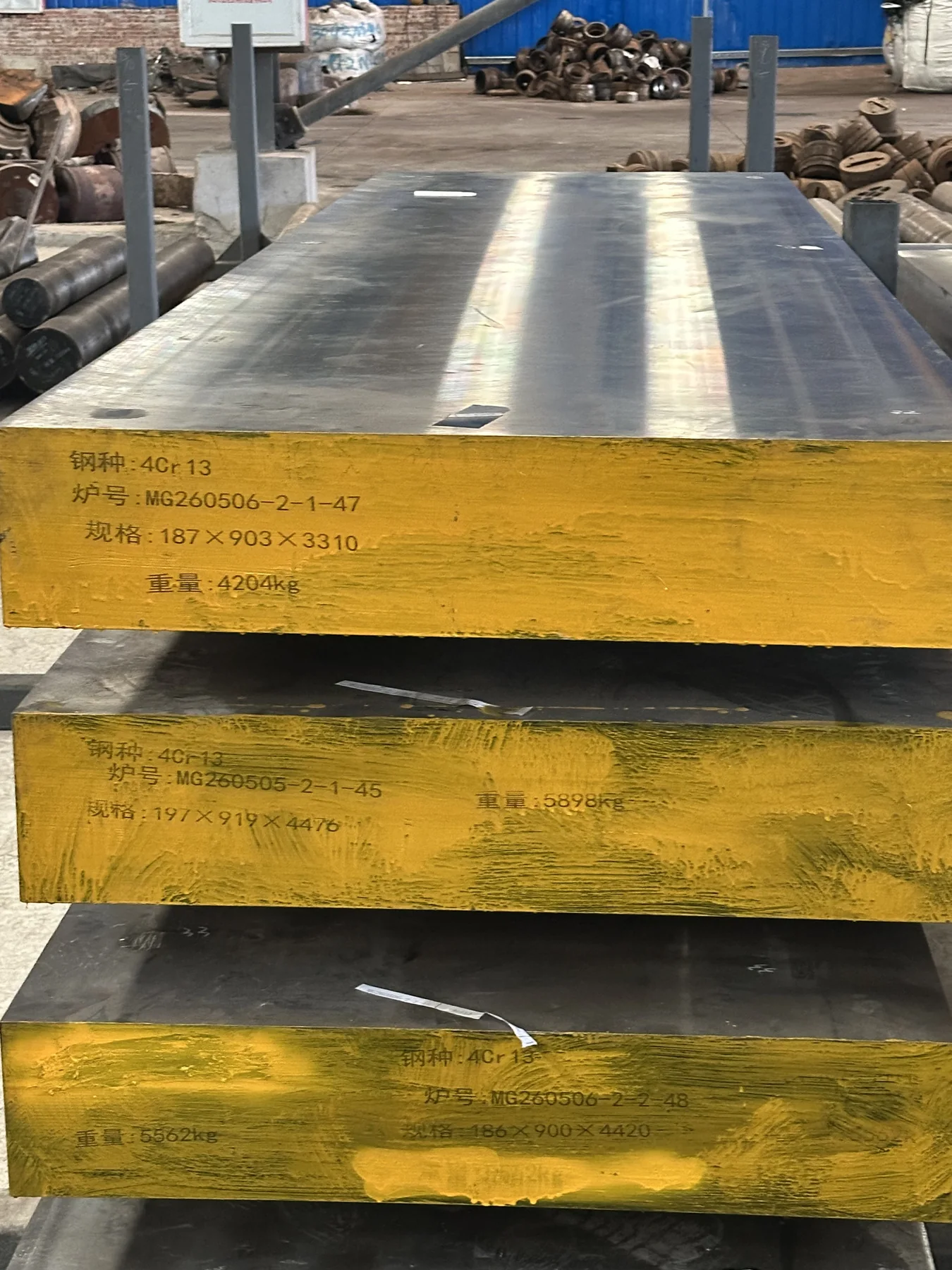
Describe the block geometry
Give thickness, width and length for every item. State whether dimensions are as-forged, rough-machined or finished, and add tolerance, corner, surface and lifting requirements where relevant. A drawing is strongly recommended for stepped blocks, pockets, holes or non-rectangular geometry.
Link size to process requirements
Large section size affects starting material, forging reduction, heating, annealing, machining and inspection. State the required grade and standard, ESR requirement and delivery condition. If the block will be heat treated by the buyer, include the intended application and target hardness so the supply condition can be discussed clearly.
Plan inspection access
The purchase specification should identify ultrasonic-testing method, scan surfaces, coverage, quality level and reporting. For large blocks, access and surface condition can affect the examination. Heat-number traceability, certificate type and any metallographic requirements should be listed separately.
Compare quotations on the same basis
Confirm whether quoted weight is based on starting size, supplied size or finished size. Compare included machining, testing, documents, packing and freight terms, not only a price per kilogram. Minimum quantity and lead time are project-specific.